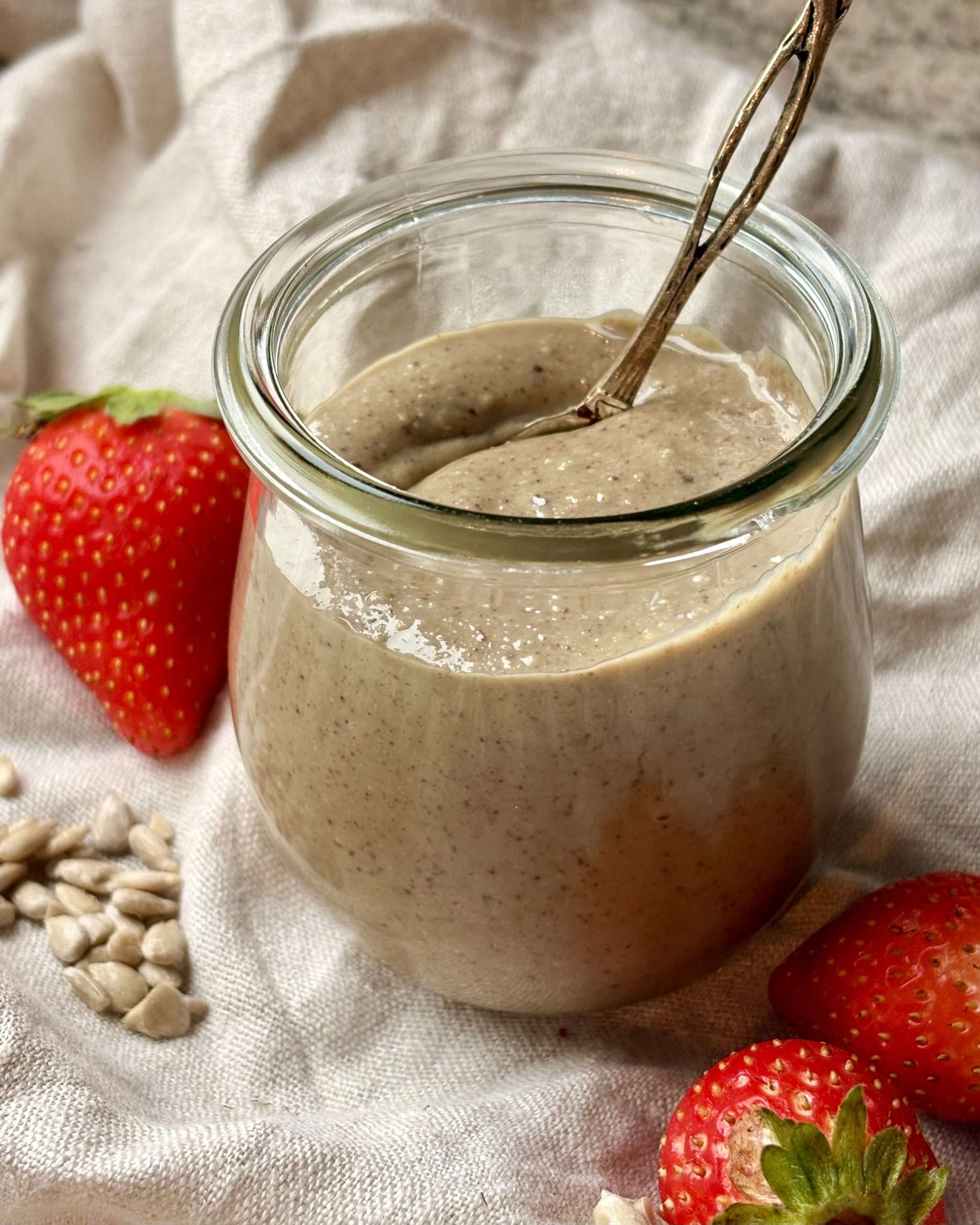
Homemade Sunflower Seed Butter
I had never tried sunflower seed butter until a few years ago, simply because it is not something you commonly find in supermarkets here in Germany. When I first wanted to try it, I decided to make my own. A few years later, I also got to taste a jar that had been brought back to me from a holiday in the US. While I also liked that store-bought version, I still prefer my homemade sunflower seed butter. I like it just slightly sweetened, with a little salt to bring out the flavor of the sunflower seeds.
For this recipe, I use lightly roasted sunflower seeds, a little coconut sugar, and a pinch of salt. The roasting gives the seeds a nice nutty flavor. The coconut sugar adds just enough sweetness without overpowering it. There is no need to add any oil.
Why You’ll Love This Recipe
Homemade sunflower seed butter is easy to make with just three ingredients. You don’t need any added oil. The sunflower seeds release their natural oils as you blend them, turning into a smooth spread.
I also like that you can adjust the sweetness to your taste. My version uses a small amount of coconut sugar, but you can add more or leave it out completely. A little extra salt can also make a big difference in flavor. And since you make it yourself, you know exactly what goes into your jar.
Health Benefits of Sunflower Seed Butter
Sunflower seeds are rich in vitamin E, an antioxidant that helps protect cells from oxidative stress. They also contain unsaturated fats, which support heart health. They also pack plant-based protein that contributes to the maintenance of muscles and other body tissues.
In addition, sunflower seeds provide important minerals such as magnesium. Magnesium plays a role in normal muscle and nerve function, energy metabolism, and bone health. Sunflower seeds also contain copper and selenium, which support several essential processes in the body.
Ingredients You’ll Need
- Sunflower seeds: Use unsalted, shelled sunflower seeds. Lightly roasting them brings out their flavor and helps give the butter a richer taste.
- Coconut sugar: Just a little adds a mild sweetness. You can use less, leave it out, or replace it with another granulated sugar or even maple syrup.
- Salt: A pinch balances the sweetness and brings out the nutty flavor of the sunflower seeds.
How to Make Sunflower Seed Butter
Start by lightly roasting the sunflower seeds. Let them cool for a little while before adding them to your food processor or high-speed blender.
Next, blend the seeds until they turn into a smooth butter. This takes some time, so be patient. At first, the seeds will look like crumbs. Then they will form a thick paste before gradually becoming smoother and creamier.
Stop to scrape down the sides of the bowl as needed. If your machine starts to get warm, give it a short break. Breaks are recommended in any case, as they give the seeds time to release their natural oils.
Once the sunflower seed butter is smooth, add the coconut sugar and salt. Blend again until everything is well combined. Taste and adjust the sweetness or salt if needed.
Transfer the finished sunflower seed butter to a clean jar to store on the shelf or in the fridge.
Blender or Food Processor?
Both a food processor and a high-speed blender can work for making sunflower seed butter, but a food processor is usually the easier option. It gives the seeds enough room to move around as they break down and release their natural oils. A high-speed blender can also do the job, although you may need to stop more often to scrape down the sides or use the tamper if your blender has one. Just make sure your machine is suitable for processing thick mixtures, and give it a break if it starts to get too warm.
Personally, I hate making nut (or seed) butters in my Vitamix. It seems to take forever, you need to use the tamper all the time, and the cleanup is a nightmare. I much prefer using my food processor for jobs like these.
How to Store Homemade Sunflower Seed Butter
I store my homemade sunflower seed butter in the refrigerator although it firms up a little in the fridge. It just lasts longer in the fridge. To store, transfer it to a clean, dry, airtight jar. Make sure to use a clean, dry spoon when scooping some out.
Homemade sunflower seed butter does not contain the preservatives found in some store-bought spreads. Its shelf life can vary depending on how fresh the seeds are, how clean the equipment is, and how it is stored. I recommend keeping it refrigerated and using it within 2–4 weeks as a conservative guideline. Always check for changes in smell, appearance, or texture before using it. Discard it if you notice mold or signs of spoilage.
You may notice a little oil separating over time. This is normal. Simply stir the sunflower seed butter until it is smooth again.
If you do store it at room temperature, according to the internet, it should last for a week at least. Again, use your senses to make sure it’s still good to eat.
How to Use Sunflower Seed Butter
There are plenty of ways to enjoy this homemade spread. Here are a few ideas:
- Spread it on toast or rice cakes.
- Stir it into oatmeal or overnight oats.
- Add a spoonful to smoothies for extra flavor.
- Use it in cookies, energy balls, or homemade snack bars.
- Drizzle it over sliced apples or bananas.
- Add it to sauces or dressings for a creamy texture.
You can also experiment with the flavor. Try adding a little cinnamon, vanilla extract, or cocoa powder. If you prefer a sweeter spread, simply increase the amount of coconut sugar.
Frequently Asked Questions
Can I make sunflower seed butter without added oil?
Yes! Sunflower seeds contain natural oils that are released during blending. You do not need to add any extra oil. It just takes a little time for the seeds to turn into a smooth butter.
Why is my sunflower seed butter still crumbly?
It probably needs more blending time. The seeds go through several stages before becoming creamy. Keep blending and scrape down the sides of the bowl when needed. Make sure your food processor or blender is suitable for making seed butter.
Do I have to roast the sunflower seeds?
Roasting the sunflower seeds brings out their nutty flavor, but it also helps with the blending process. When the seeds are still slightly warm, they release their natural oils more easily, making it easier to turn them into a smooth, creamy butter. Let them cool just enough to handle safely, then blend them while they are still warm.
Can I leave out the coconut sugar?
Absolutely. The coconut sugar adds a touch of sweetness to balance out the natural bitterness of the seeds, but the sunflower seed butter will also work without it. You can adjust the amount to suit your taste or leave it out completely.
How long does homemade sunflower seed butter last?
I keep mine in an airtight jar in the refrigerator and aim to use it within 2–4 weeks. This is a conservative storage guideline rather than a guaranteed shelf life. Use clean utensils and discard the butter if you notice mold or an unusual smell.
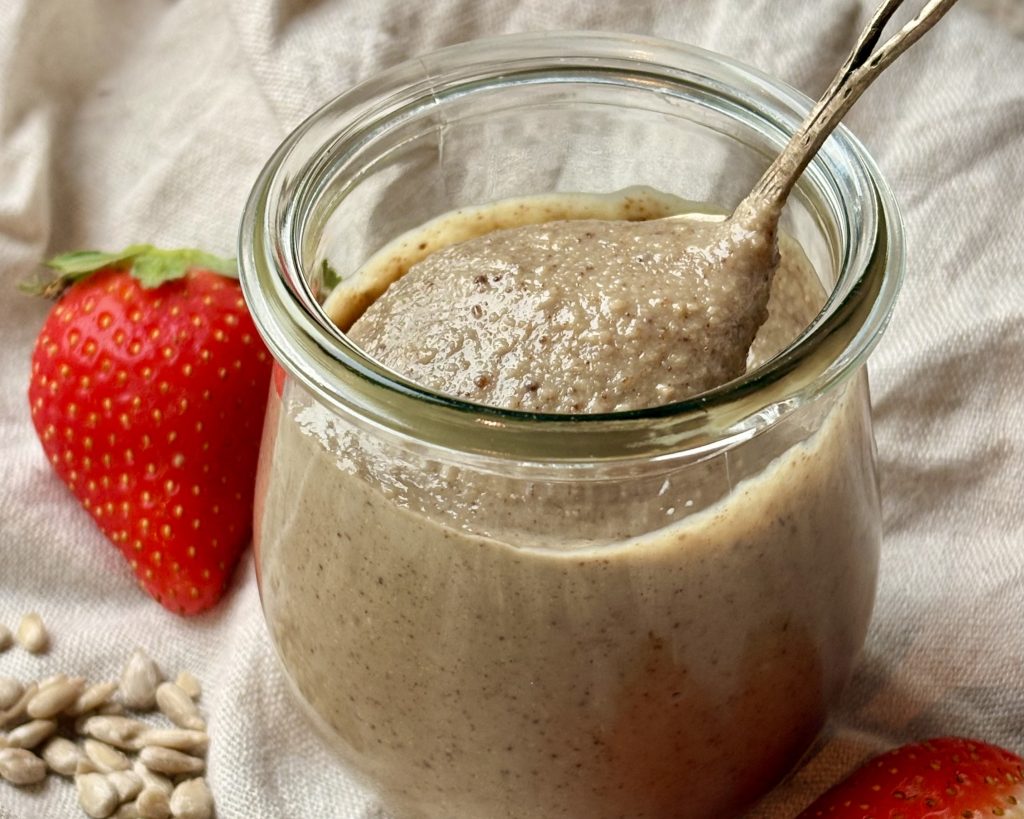
Homemade Sunflower Seed Butter
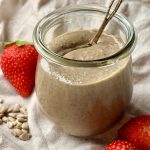
Creamy homemade sunflower seed butter made with lightly roasted sunflower seeds, a little coconut sugar, and a pinch of salt. An easy, lightly sweetened spread with no added oil.
- Prep Time: 10
- Cook Time: 30
- Total Time: 40 minutes
- Yield: 20
- Category: Breakfast, Dessert, Snack
- Method: blending, Roasting
- Diet: Vegan, Vegetarian
Ingredients
- 500 g (1.1 lbs) raw sunflower seeds, shelled
- 3-4 tbsp coconut sugar
- 1/4 tsp salt, or to taste
Instructions
- Pre-heat the oven to 160°C (320° Fahrenheit). Roast the sunflower seeds for about 10 minutes.
- Leave the seeds to cool before you start blending.
- Add the cooled seeds to a food processor or blender. Blend on high until smooth. This might take a while – I never let the food processor run for minutes on end, but blend for half a minute or up to a minute or so at a time. It will take some time until the sunflower seeds turn into a butter. First, the seeds are ground into a dust, then start forming a paste, and eventually, will break down into a more runny texture. Just be patient and you’ll get there. Make sure to scrape down the sides as needed. If using a blender, use the tamper.
- At this point, add the desired amounts of coconut sugar and salt, mix again and taste if you like it like that.
- Store in a clean jar (transferring with a clean spoon) in the fridge or at room temperature.